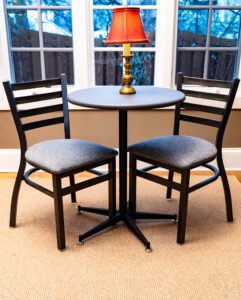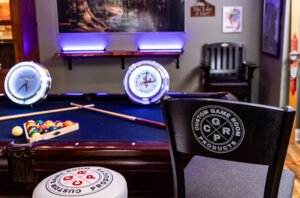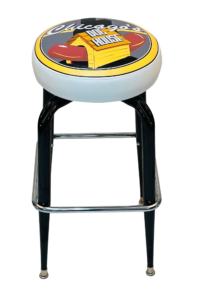

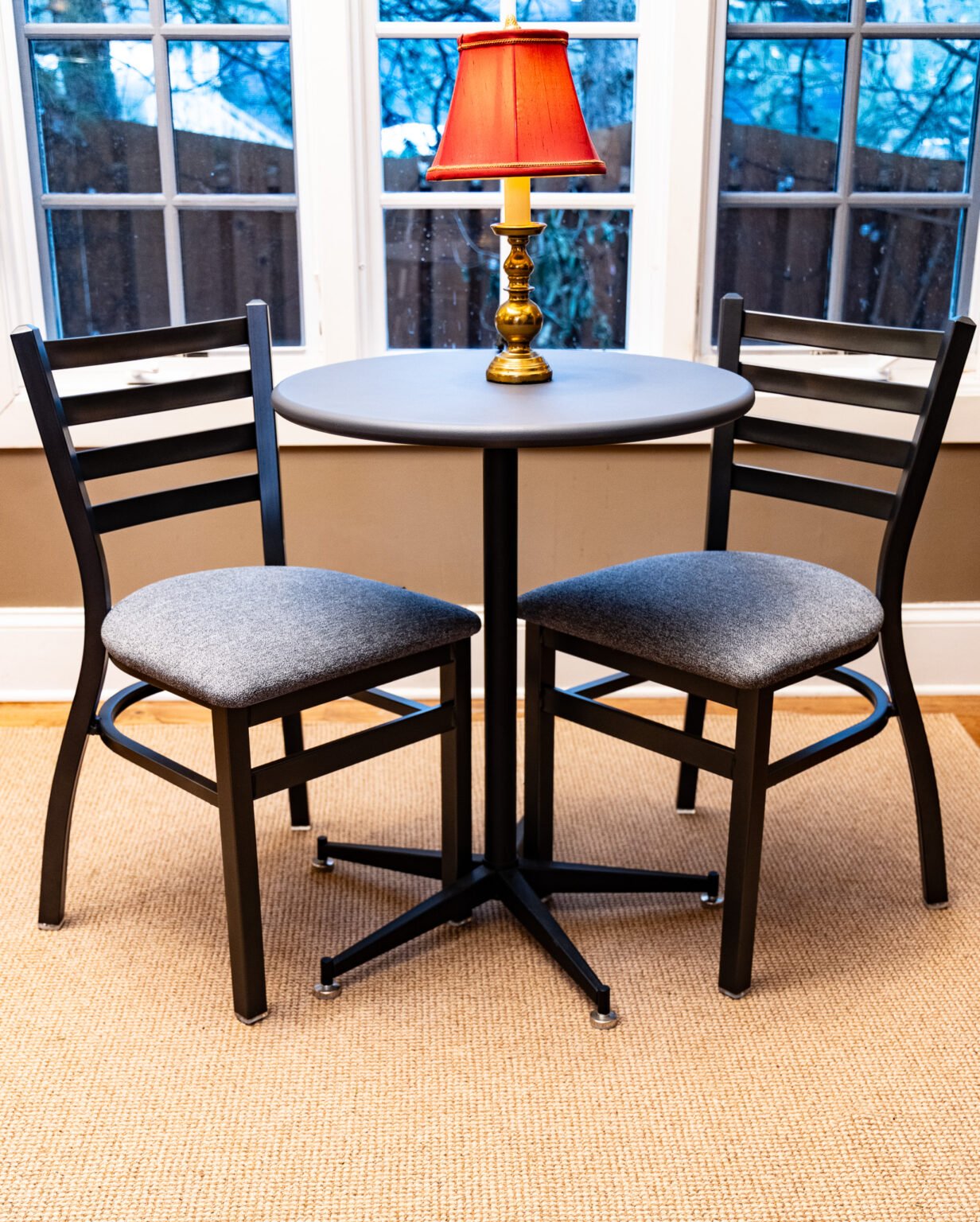
When someone sees a finished bar stool, table, or clock, what they are really seeing is the last step in a much longer process.
At Custom Game Room Products, manufacturing is not treated as a black box. It is a deliberate sequence of decisions, materials, and quality checks designed to ensure that every finished product looks right, performs well, and holds up in real environments.
This article walks through that process at a high level. Not as a technical manual, but as a clear explanation of how ideas become finished products that distributors can confidently present to their clients.
It Starts With the End Use in Mind
Before anything is produced, the intended environment matters.
Our products are designed for spaces that see real use. Game rooms, bars, breweries, corporate offices, showrooms, and entertainment spaces are not gentle environments. Furniture in these settings needs to balance visual impact with durability and long-term performance.
That reality informs decisions from the very beginning.
Designs are not created in isolation. They are developed with weight capacity, stability, surface wear, print longevity, and daily interaction in mind. A stool needs to feel solid when someone sits down. A table needs to stay level and sturdy. A clock needs to be readable, reliable, and visually striking without being fragile.
Manufacturing starts by understanding how the product will be used, not just how it will look.

Materials Chosen for Performance, Not Just Appearance
Material selection plays a major role in both the look and lifespan of the finished product.
Structural components are chosen for strength and stability. Frames and bases are built to support consistent use while maintaining clean lines and balanced proportions. Finishes are selected to resist wear while still delivering a polished, professional appearance.
For printed surfaces, materials are selected to support vibrant color, clarity, and long-term durability. Print areas are designed to protect artwork from excessive wear while still keeping branding front and center.
Every material choice is a balance. It needs to look good on day one and still perform after extended use. That balance is especially important for distributor-sold products that represent a client’s brand.
Artwork and Customization Preparation
Customization is one of the defining features of Custom Game Room Products, and it requires precision long before anything goes into production.
Artwork files are reviewed to ensure proper sizing, alignment, and print quality. This step is critical. Clean artwork preparation prevents issues later in the process and ensures that logos, colors, and graphics appear exactly as intended on the finished product.
Rather than forcing designs into fixed templates, customization is approached with flexibility. This allows distributors to work with a wide range of client branding styles while still maintaining consistent production quality.
This stage is where creative intent meets technical reality, and getting it right sets the tone for everything that follows.

Precision in the Printing Process
Printing is not just about putting ink on a surface. It is about consistency, clarity, and longevity.
Print methods are chosen to ensure sharp detail, accurate color reproduction, and strong adhesion to the selected materials. The goal is not just to make the product look good under studio lights, but to ensure that the branding remains crisp in real-world conditions.
Care is taken to align artwork properly and avoid distortion, misregistration, or uneven coverage. These details matter when products are displayed prominently in public or branded environments.
A well-executed print elevates the entire product. It turns furniture into a brand asset rather than just a functional item.
Assembly With Purpose
Once components are printed and prepared, the assembly process begins.
Assembly is where individual parts become a finished product. Frames, seating components, surfaces, and hardware come together in a controlled, repeatable process designed to maintain consistency across units.
This is also where balance, stability, and alignment are verified. A stool should not wobble. A table should sit flat. Components should feel solid and intentional.
Assembly is not rushed. The goal is to ensure that every finished product feels like a single, cohesive piece rather than a collection of parts.

Quality Checks Before Products Leave the Floor
Before products are packaged and prepared for shipment, quality checks play a critical role.
Visual inspection ensures that finishes are clean, prints are aligned, and surfaces are free from defects. Functional checks confirm that moving components operate as expected and that structural elements are secure.
These steps help catch issues early and ensure that products leaving the facility meet the standards expected by distributors and end clients alike.
Consistency is key. Distributors rely on predictable quality because it protects their reputation and reduces friction in the sales process.
Packaging and Preparation for Shipment
Packaging is more than protection. It is part of the customer experience.
Products are packaged to protect finishes, printed surfaces, and structural components during transit. Care is taken to reduce movement, prevent scuffing, and ensure that products arrive in the same condition they left the facility.
Clear labeling and preparation help streamline handling and delivery, especially when products are being shipped to commercial locations or distributed through third-party partners.
The goal is simple. Products should arrive ready to be placed, installed, or displayed without surprises.
Built to Represent Your Brand
Every step in the manufacturing process serves a larger purpose. These products do not just carry a logo. They represent a brand in physical space.
When a distributor presents a custom stool, table, or clock to a client, that product becomes part of how the client’s brand is experienced. Quality, finish, and durability all reflect back on both the distributor and the manufacturer.
That responsibility is taken seriously.
Manufacturing is not treated as a commodity process. It is viewed as a craft that blends design, engineering, and execution.
Why This Matters to Distributors
For distributors, understanding how products are made builds confidence.
It reinforces that there is a real process behind the catalog. Real materials. Real checks. Real attention to detail.
This transparency helps distributors speak more confidently about the products they sell. It also reassures clients that they are investing in something built with intention, not mass-produced without care.
Manufacturing quality becomes a quiet selling point. One that supports long-term relationships rather than one-off transactions.

Designed for Longevity and Scale
While craftsmanship is central, scalability is also important.
Manufacturing processes are designed to support consistency across larger orders without sacrificing quality. This balance allows distributors to confidently scale projects while maintaining the same standards across every unit.
Whether an order includes a handful of pieces or a larger rollout, the same principles apply. Materials, printing, assembly, and inspection all follow the same expectations.
This consistency makes Custom Game Room Products a reliable partner for long-term distributor relationships.
A Process That Continues to Evolve
Manufacturing is not static. Processes evolve as materials improve, techniques advance, and new product ideas are introduced.
Feedback from distributors and real-world use informs ongoing refinement. What works well gets reinforced. What can be improved gets adjusted.
This continuous improvement mindset helps ensure that products remain relevant, competitive, and aligned with how spaces are designed and used today.
More Than a Finished Product
At the end of the process, what leaves the facility is more than furniture.
It is a finished representation of a brand’s identity, built to function, last, and look good doing it. That is what manufacturing means at Custom Game Room Products.
From concept to final inspection, every step is designed to support quality, customization, and confidence for distributors and clients alike.
As our product line and resources continue to expand, this commitment to thoughtful manufacturing remains at the core of everything we produce.